Myself When I am Real
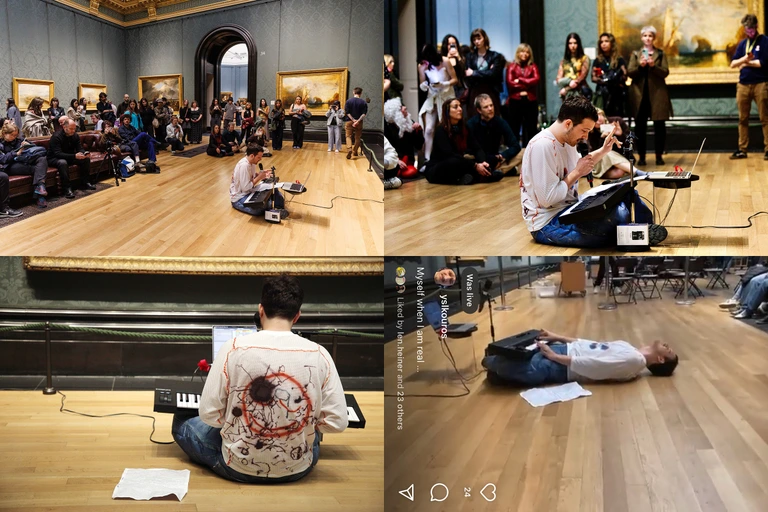
In this performance I sat in front of Joseph Wright of Derby's 1768 work, An Experiment on a Bird in the Air Pump, which shows a sublime/horrific scene of this individual holding his finger to the air while a bird sits inside a glass bulb. Two older men are portrayed kind of proclaiming—to a larger group of frightened onlookers—the merit and virtue of this ongoing experiment. A source of light brightens people's faces from below, suggesting an emission of reason or truth that doesn't come from the heavens. The painting possesses a wisdom beyond its characters, depicting momentary excitement around the virtue of the scientific method and the prospect of technological advancement, while also eliciting a kind of foreboding horror.
In my performance, I sat down in front of the painting and confronted it with a sound and spoken word piece made of ephemera from the internet—the detritus of a mechanism that after 250+ years participates in the same societal projects that were being architected at the time of this painting. I considered the 2023 internet as a huge capital-generating project rooted in an optimistic vision of digital individuality, autonomy, and expression. However, the cultural ephemera I introduce originate from algorithms created by big tech companies, made not by artists but by "content creators" for online audiences, drawn from feeds that have scaled and established themselves on the internet. I don't have a sense of doom about the ways these content creators are non-artists; I just seek a feeling of reality and recognition, holding these sorts of dissonant extremes together in a landscape of ambient sound, spoken word, and appropriation that the format of the piece allowed for.
I did this with an even more intense feeling as though the cultural artifacts of being Gen Z on algorithms and the internet are not random but manufactured objects that speak intensely about the psychological condition of being an adolescent on technology. The dystopia I worked with tied in references to art history and the canon of contemporary music.
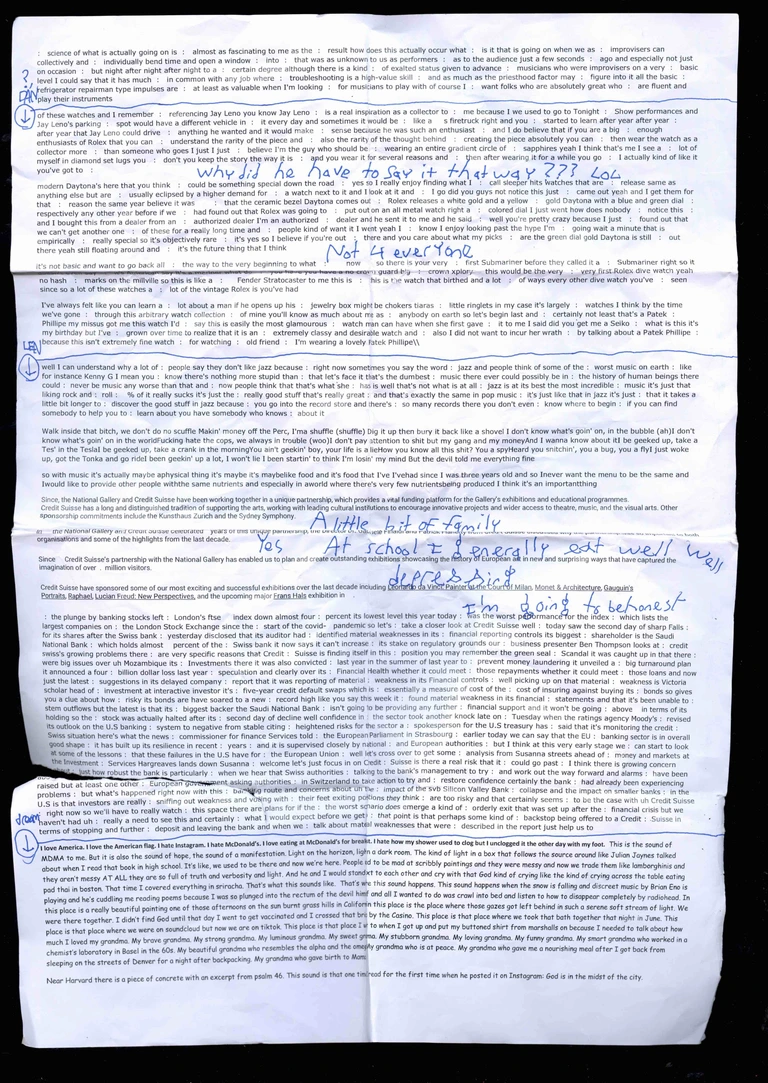
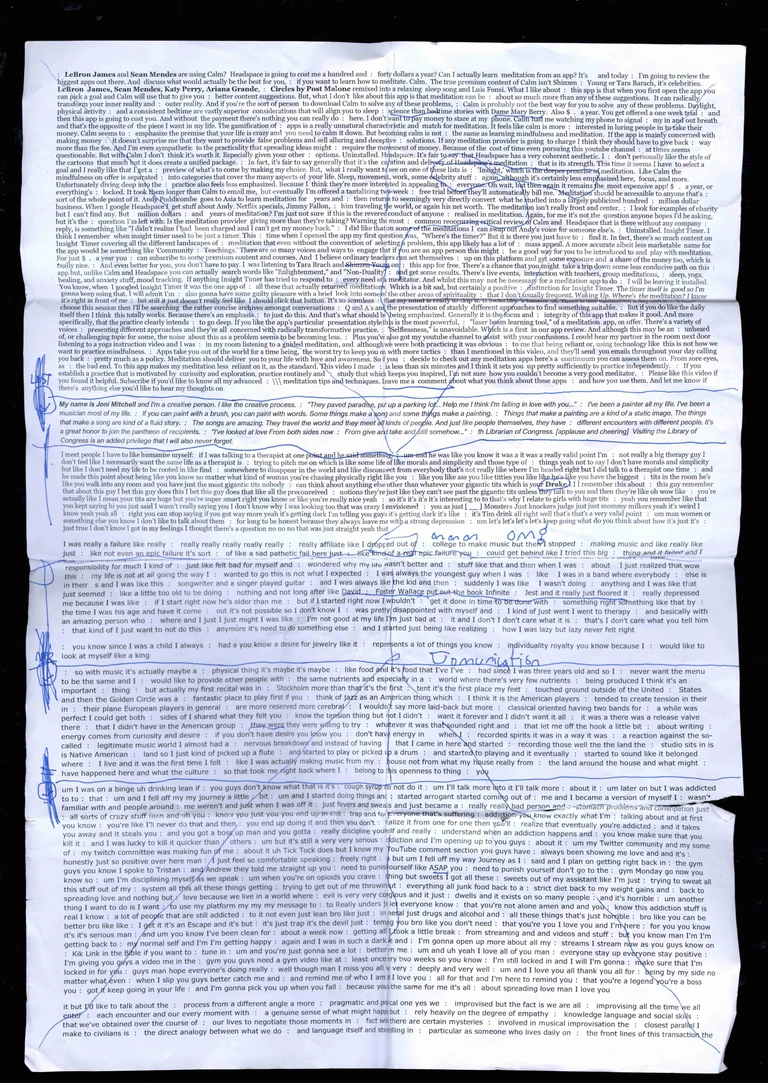
I produced a dense A3 sheet of text that I read off of while performing. The speech was produced by aggregating and synthesizing the auto-generated captions of a bunch of different videos: Lil Yachty interviewing Drake about the structure of a rap career, Joni Mitchell talking about being creative, Twitch influencers talking about their addiction to prescription drugs, James Murphy talking about being a 30s millennial in New York City, a YouTuber doing an in-depth comparison of meditation apps and the celebrities who have endorsed them, et cetera. All of these monologues were performed over a synthesis of trap beats, live improvised piano, and composed music. My piano playing and engaging of ambience brought musical traditions of the 60s like those of Eno, Riley, Oliveros, Reich, into contact with ephemera and aesthetic cues of 2010s trap and 2020s rage rap subgenres.
My personal stake in seeking this criticality towards Enlightenment/technological advancement about the progression of technology stems back to my continual interest in California as the landscape I call home, yet the breeding ground for counterculture and weaponized technologies and the way that these technologies have synthesized fake spirituality and appropriated Eastern spirituality with them. These traditions in music are important to me because of their now-outdated imagined relationships with technology. There's something I want to say about that and that is pertinent to Fluxus and very connected to the Californian ideology. I have an ongoing project to express how the cues and readymades of these sounds express vastly separated attempts to respond to and communicate a set of cultural differences imposed by technology at different points. Ambient/Fluxus for the sixties, and rage for twenty-twenties.
The title Myself When I am Real references an improvised piano piece by Charles Mingus from his piano album. I'm interested in connecting this piece to a lineage and practice of improvised music while also using the wording as an existing readymade to take on new meaning in the context of cultural dispositions of Gen Z—the statement in the lexicon of Instagram and influencer-speak reads as ironic, and a self-referential description of experience. While this piece seeks something ironic and brash—facing addiction, dystopia, and the artlessness of what algorithms settle for as "content" over art, this piece is not uninterested in wholeness and the soul, and is unironically real and genuine and about my life as much as it seeks to elicit these hard edges of what it means to be Gen Z and a dweller of digital technology. I worked on these ideas a lot more in Opium Glowboy Lowkey Got Heat as well.